
Collagenase & Dispase
Collagenases for Tissue Dissociation and Bioprocessing
Collagenases from Clostridium histolyticum are bacterial collagenase preparations containing collagenolytic enzymes and other proteases. The collagenolytic enzymes can cleave native collagen, a key structural protein of connective tissues. Additional proteolytic activities are required to break down other components of the extracellular matrix. For tissue dissociation, commonly used bacterial collagenase preparations therefore contain several enzymes, including collagenases, a sulfhydryl protease, clostripain, a trypsin-like enzyme and an aminopeptidase. Together, these activities support the breakdown of the extracellular matrix and the dissociation of tissues into individual cells.
For more information on collagenase preparations, see the Collagenase Wiki.
Explore the range of available Collagenase and Dispase® products, and find a detailed table of their preparation speciality, and common application.
Collagenase Sampling Program, Lot Reservation & Matching Service
Collagenase Sampling Program & Lot Reservation
- Request 100 mg samples of up to two different lots for testing in your assay system.
- Evaluate the samples over a 4-week period.
- Reserve a minimum of 5 g of each lot for subsequent ordering.
Lot Matching Service
- Provide the lot number of a collagenase that performed well in your application.
- We identify the closest available match based on the enzymatic activity profile of the collagenase preparation, including relevant side activities.
For full details, visit Collagenase Services.
Dispase for Tissue Dissociation and Bioprocessing
Dispase®/Neutral Protease is an extremely stable non-specific metalloprotease which is produced by Paenibacillus polymyxa. Although related to trypsin, neutral protease is significantly less harmful to cells and can help prevent unwanted cell clumping without cell membrane damage. It cleaves fibronectin, collagen IV, and to a lesser extent collagen I, but it does not cleave collagen V or laminin. Thanks to its gentle proteolytic activity, this enzyme is particularly well-suited for preparing primary cells and for secondary cell culture (subcultivation), as it preserves cell membranes. Additionally, it serves as a secondary enzyme in cell isolation and tissue dissociation procedures, often in conjunction with Collagenases. It is commonly employed to separate the skin epidermis from the dermis while preserving epithelial sheets. Furthermore, it facilitates the isolation of stem cells, hepatocytes, and other cell types.
Animal Free (AF) Dispases® and Collagenases
AF Dispase and Collagenases, as well as optimized blends, are derived from cultures grown in medium completely devoid of animal-based components and designed for bioprocessing applications where introduction of potential animal derived pathogens must be prevented.
Find an overview of Preparations of Collagenase and Dispase®/Neutral Protease and their applications.
The choice and combination of enzymes depends on the tissue type, experimental requirements, and desired outcomes of the tissue dissociation procedure. The Worthingtons’ Tissue Dissociation Guide provides a collection of Tissue Dissociation Protocols for many different tissues from a broad spectrum of species.
DNase
DNase is also used in tissue dissociation and culture work to digest DNA from damaged cells thereby reducing viscosity, and removing membrane bound DNA fragments. Therefore, cell aggregation is prevented. Codes: DP and DCLS are suitable for these applications.
-
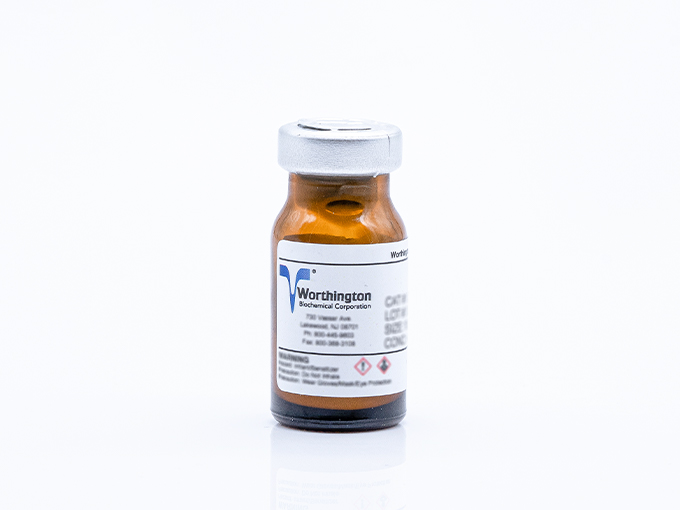
Collagenase Type 1 - CLS-1 (1g)
Cat.-Nr: LS004196
Worthington Collagenase Type 1 preserves the original balance of collagenase, caseinase, clostripain, and tryptic activities. This formulation is... Read More
-
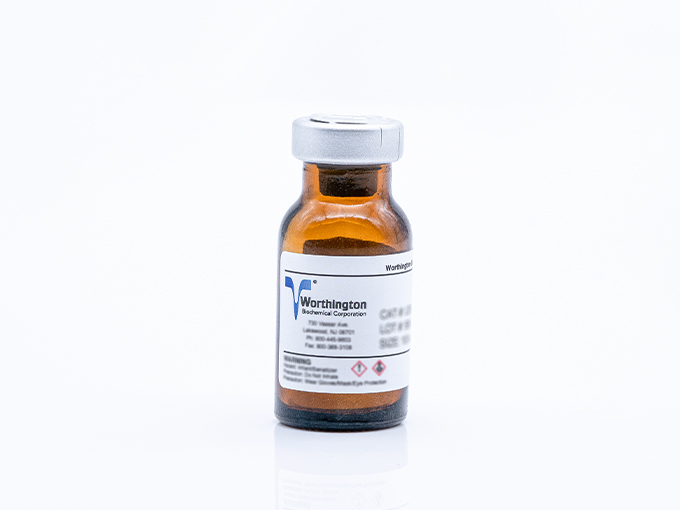
Collagenase Type 1, Filtered - CLSS-1 (5x50mg)
Cat.-Nr: LS004216
Worthington Collagenase Type 1 preserves the original balance of collagenase, caseinase, clostripain, and tryptic activities. This formulation is... Read More
-
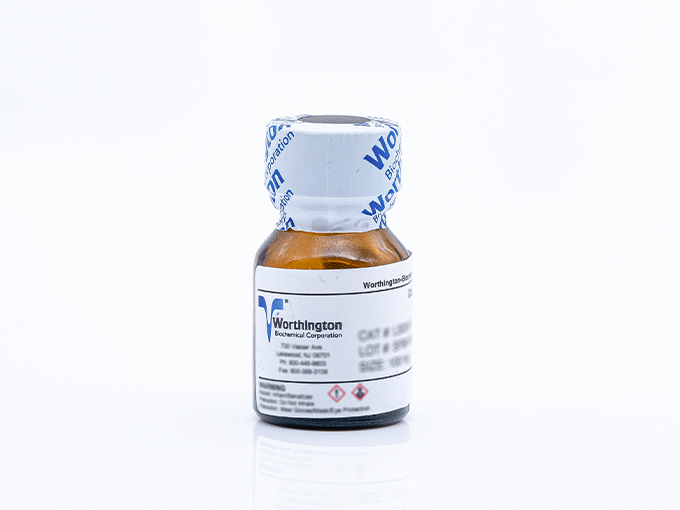
Collagenase Type 2 - CLS-2 (1g)
Cat.-Nr: LS004176
Worthington Collagenase Type 2 is enriched for clostripain and associated proteolytic activities, making it particularly effective for dissociating... Read More
-
Collagenase Type 2, Filtered - CLSS-2 (5x50mg)
Cat.-Nr: LS004204
Worthington Collagenase Type 2 is enriched for clostripain and associated proteolytic activities, making it particularly effective for dissociating... Read More
-
Collagenase Type 3 - CLS-3 (1g)
Cat.-Nr: LS004182
Worthington Collagenase Type 3 offers typical collagenase activity with lower levels of secondary proteases and other proteolytic contaminants. It is... Read More
-
Collagenase Type 3, Filtered - CLSS-3 (50mg)
Cat.-Nr: LS004206
Worthington Collagenase Type 3 offers typical collagenase activity with lower levels of secondary proteases and other proteolytic contaminants. It is... Read More
-
Collagenase Type 4 - CLS-4 (1g)
Cat.-Nr: LS004188
Worthington Collagenase Type 4 is a low-tryptic-activity collagenase preparation designed to help minimize damage to cell-surface proteins and... Read More
-
Collagenase Type 4, Filtered - CLSS-4 (5x50mg)
Cat.-Nr: LS004212
Worthington Collagenase Type 4 is a low-tryptic-activity collagenase preparation designed to help minimize damage to cell-surface proteins and... Read More
-
Collagenase Type 5 - CLS-5 (1g)
Cat.-Nr: LS005282
Worthington Collagenase Type 5 contains higher collagenase and caseinase activities and is particularly suited for the dissociation of dense... Read More
-
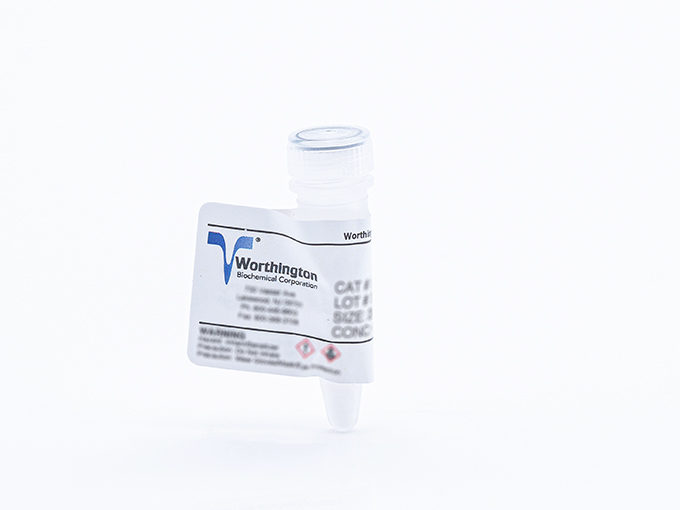
Collagenase Type 5, Filtered - CLSS-5 (5x50mg)
Cat.-Nr: LS005287
Worthington Collagenase Type 5 contains higher collagenase and caseinase activities and is particularly suited for the dissociation of dense... Read More
-
Collagenase Type 6 - CLS-6 (500mg)
Cat.-Nr: LS005319
Worthington Collagenase Type 6 is a high-activity collagenase preparation with elevated collagenase, FALGPA and caseinase activities. It has a... Read More
-
Collagenase Type 7 - CLS-7 (500mg)
Cat.-Nr: LS005333
Worthington Collagenase Type 7 contains collagenase and caseinase activities approximately four-fold higher than those of Collagenase Types 1 and 2.... Read More
-
Collagenase Type A, Animal Free - CLSAFA (1g)
Cat.-Nr: LS004154
Prepared cultures grown in medium completely devoid of animal based components and designed for bioprocessing applications where introduction of... Read More
-
Collagenase Type A, Animal Free, Filtered - CLSAFAS (50mg)
Cat.-Nr: LS004118
Animal Free (AF) Types AFA, AFB, and AFC collagenases are derived from cultures grown in medium completely devoid of animal-based components and are... Read More
-
Collagenase Type B, Animal Free - CLSAFB (1g)
Cat.-Nr: LS004147
Prepared from cultures grown in medium completely devoid of animal based components and designed for bioprocessing applications where introduction of... Read More
-
Collagenase Type B, Animal Free, Filtered - CLSAFBS (50mg)
Cat.-Nr: LS004124
Animal Free (AF) Types AFA, AFB, and AFC collagenases are derived from cultures grown in medium completely devoid of animal-based components and are... Read More
-
Collagenase Type C, Animal Free - CLSAFC (1g)
Cat.-Nr: LS004140
Animal Free (AF) Types AFA, AFB, and AFC collagenases are derived from cultures grown in medium completely devoid of animal-based components and are... Read More
-
Collagenase Type C, Animal Free, Filtered - CLSAFCS (50mg)
Cat.-Nr: LS004130
Animal Free (AF) Types AFA, AFB, and AFC collagenases are derived from cultures grown in medium completely devoid of animal-based components and are... Read More
-
Collagenase Type D, Animal Free - CLSAFD (500mg)
Cat.-Nr: LS004162
Prepared from cultures grown in medium completely devoid of animal based components and designed for bioprocessing applications where introduction of... Read More
-
Neutral Protease (Dispase), Partially Purified, Animal Free - NPRO2 (5g)
Cat.-Nr: LS02111
Neutral protease (Dispase®) is a non-mammalian animal origin free (AOF) metallo, neutral protease, purified by methods developed at Worthington. Its... Read More
-
Neutral Protease (Dispase), Purified, Animal Free - NPRO (50mg)
Cat.-Nr: LS02104
Neutral protease (Dispase®) is a non-mammalian animal origin free (AOF) metallo, neutral protease, purified by methods developed at Worthington. Its... Read More
-
STEMxyme® 1 Collagenase/Neutral Protease (Dispase) - STZ1 (50mg)
Cat.-Nr: LS004106
A specialized combination of Animal Origin-Free Clostridium histolyticum collagenase (Code: CLSAFB) and animal origin free Bacillus polymyxa neutral... Read More
-
STEMxyme® 2 Collagenase/Neutral Protease (Dispase) - STZ2 (50mg)
Cat.-Nr: LS004112
A specialized combination of Animal Origin-Free Clostridium histolyticum collagenase (Code: CLSAFB) and animal origin free Bacillus polymyxa neutral... Read More
-
Collagenase Type 1 - CLS-1 (100mg)
Cat.-Nr: LS004194
The original balance of enzymatic activities. Each lot assayed for collagenase, caseinase, clostripain and tryptic activities. Suggested for... Read More
-
Collagenase Type 1 - CLS-1 (5g)
Cat.-Nr: LS004197
The original balance of enzymatic activities. Each lot assayed for collagenase, caseinase, clostripain and tryptic activities. Suggested for... Read More
-
Collagenase Type 1, Filtered - CLSS-1 (1g)
Cat.-Nr: LS004217
Worthington Collagenase Type 1 preserves the original balance of collagenase, caseinase, clostripain, and tryptic activities. This formulation is... Read More
-
Collagenase Type 1, Filtered - CLSS-1 (50mg)
Cat.-Nr: LS004214
Worthington Collagenase Type 1 preserves the original balance of collagenase, caseinase, clostripain, and tryptic activities. This formulation is... Read More
-
Collagenase Type 2 - CLS-2 (100mg)
Cat.-Nr: LS004174
Collagenase Type II (CLS-2, Collagenase Type II) is prepared to contain a higher clostripain activity. Suggested for bone, heart, liver, thyroid and... Read More
-
Collagenase Type 2 - CLS-2 (5g)
Cat.-Nr: LS004177
Prepared to contain higher clostripain activity. Suggested for bone, heart, liver, thyroid and salivary primary cell isolation. Supplied as a... Read More
-
Collagenase Type 2, Filtered - CLSS-2 (1g)
Cat.-Nr: LS004205
Worthington Collagenase Type 2 is a collagenase preparation enriched for clostripain and other proteolytic activities, recommended for efficient... Read More
-
Collagenase Type 2, Filtered - CLSS-2 (50mg)
Cat.-Nr: LS004202
Worthington Collagenase Type 2 is a collagenase preparation enriched for clostripain and other proteolytic activities, recommended for efficient... Read More
-
Collagenase Type 3 - CLS-3 (100mg)
Cat.-Nr: LS004180
Worthington Collagenase Type 3 offers typical collagenase activity with lower levels of secondary proteases and other proteolytic contaminants. It is... Read More
-
Collagenase Type 3 - CLS-3 (5g)
Cat.-Nr: LS004183
Worthington Collagenase Type 3 offers typical collagenase activity with lower levels of secondary proteases and other proteolytic contaminants. It is... Read More
-
Collagenase Type 3, Filtered - CLSS-3 (5x50mg)
Cat.-Nr: LS004208
Worthington Collagenase Type 3 offers typical collagenase activity with lower levels of secondary proteases and other proteolytic contaminants. It is... Read More
-
Collagenase Type 4 - CLS-4 (100mg)
Cat.-Nr: LS004186
Worthington Collagenase Type 4 is a low-tryptic-activity collagenase preparation designed to help minimize damage to cell-surface proteins and... Read More
-
Collagenase Type 4 - CLS-4 (5g)
Cat.-Nr: LS004189
Worthington Collagenase Type 4 is a low-tryptic-activity collagenase preparation designed to help minimize damage to cell-surface proteins and... Read More
-
Collagenase Type 4, Filtered - CLSS-4 (1g)
Cat.-Nr: LS004209
Worthington Collagenase Type 4 is a low-tryptic-activity collagenase preparation designed to help minimize damage to cell-surface proteins and... Read More
-
Collagenase Type 4, Filtered - CLSS-4 (50mg)
Cat.-Nr: LS004210
Worthington Collagenase Type 4 is a low-tryptic-activity collagenase preparation designed to help minimize damage to cell-surface proteins and... Read More
-
Collagenase Type 5 - CLS-5 (100mg)
Cat.-Nr: LS005280
Worthington Collagenase Type 5 contains higher collagenase and caseinase activities and is particularly suited for the dissociation of dense... Read More
-
Collagenase Type 5 - CLS-5 (5g)
Cat.-Nr: LS005283
Worthington Collagenase Type 5 contains higher collagenase and caseinase activities and is particularly suited for the dissociation of dense... Read More
-
Collagenase Type 5, Filtered - CLSS-5 (1g)
Cat.-Nr: LS005288
Worthington Collagenase Type 5 contains higher collagenase and caseinase activities and is particularly suited for the dissociation of dense... Read More
-
Collagenase Type 5, Filtered - CLSS-5 (50mg)
Cat.-Nr: LS005286
Worthington Collagenase Type 5 contains higher collagenase and caseinase activities and is particularly suited for the dissociation of dense... Read More
-
Collagenase Type 6 - CLS-6 (100mg)
Cat.-Nr: LS005318
Prepared to contain above normal collagenase, FALGPA and Caseinase activities and designed to be enriched with Type II (col H)... Read More
-
Collagenase Type 6 - CLS-6 (2.5g)
Cat.-Nr: LS005321
Prepared to contain above normal collagenase, FALGPA and Caseinase activities and designed to be enriched with Type II (col H)... Read More
-
Collagenase Type 7 - CLS-7 (100mg)
Cat.-Nr: LS005332
Worthington Collagenase Type 7 contains collagenase and caseinase activities approximately four-fold higher than those of Collagenase Types 1 and 2.... Read More
-
Collagenase Type 7 - CLS-7 (2.5g)
Cat.-Nr: LS005335
Worthington Collagenase Type 7 contains collagenase and caseinase activities approximately four-fold higher than those of Collagenase Types 1 and 2.... Read More
-
Collagenase Type A, Animal Free - CLSAFA (100mg)
Cat.-Nr: LS004152
Prepared cultures grown in medium completely devoid of animal based components and designed for bioprocessing applications where introduction of... Read More
-
Collagenase Type A, Animal Free - CLSAFA (5g)
Cat.-Nr: LS004156
Prepared cultures grown in medium completely devoid of animal based components and designed for bioprocessing applications where introduction of... Read More
-
Collagenase Type A, Animal Free, Filtered - CLSAFAS (5x50mg)
Cat.-Nr: LS004119
Collagenase, Animal Origin-Free (Code: CLSAFA) which is filtered through a 0.22 micron membrane and lyophilized in vials.
-
Collagenase Type B, Animal Free - CLSAFB (100mg)
Cat.-Nr: LS004145
Prepared from cultures grown in medium completely devoid of animal based components and designed for bioprocessing applications where introduction of... Read More