OUR SERVICES
iPSC Generation & Gene EditingHaemostasis & ThrombosisCell Isolation & MediaEnzyme Preparation and TestingCollagenase Services
iPSC Generation, Differentiation & Gene Editing Services
We offer iPSC Generation, Disease Modeling & Correction, Differentiation, and Neurotoxicity Screening Services in collaboration with Applied StemCell, a globally recognized leader in in vitro and in vivo gene editing. Our partner is ISO 9001 and ISO 13485 certified and has developed more than 1,800 unique engineered cell line models.
The services include iPSC generation, (iPSC) genome editing, and iPSC differentiation to support a wide range of research applications. Additionally, a broad selection of cGMP-compliant services for iPSCs ensures high-quality standards for clinical and translational projects.
With these solutions, researchers gain the flexibility and expertise needed to advance their iPSC-based studies efficiently and reliably.
Genome Editing Services
Several gene-editing technologies are available to enhance the precision and flexibility of iPSC engineering, including CRISPR/Cas9, MAD7, and the proprietary TARGATT™ technology from Applied StemCell (ASC).
You benefit from ASC bringing over 18 years of specialized expertise, 1,800+ engineered cell models, and a >98% success rate to your project, ensuring reliable, high-precision results. This comprehensive suite of tools ensures highly accurate and efficient gene modifications, enabling the creation of customized cell lines for diverse applications.
Turnaround times are fast:
- as early as 6–8 weeks when using one of our iPSC control lines or
- 2–3 months when working with your own iPSCs.
Match the iPSC genome editing technology to your project goals:
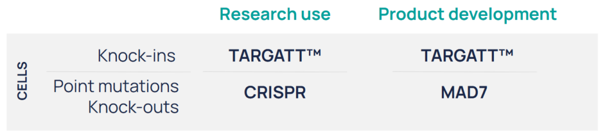
Discover the mechanisms and unique advantages of leading gene editing technologies:
CRISPR/Cas9
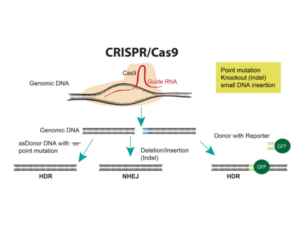
The go-to gene editing technology for knockouts and point mutations, we also implement the powerful CRISPRa and CRISPRi variants for gene expression control.
MAD7
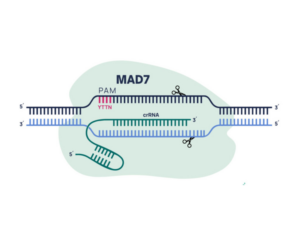
A Cas12a-like enzyme with more straightforward licensing than CRISPR, MAD7 is the tool we turn to for clients engineering cell lines for product development.
TARGATT®
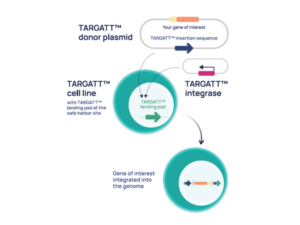
Efficient, site-specific knock-in of large DNA fragments into the H11 safe harbor locus. Ideal for stable or inducible expression, even with inserts >50 kb.
Unsure about the best approach? Tell us your desired modification and project parameters (target gene, host cell type and payload size), and we’ll match you with the ideal technology (CRISPR, MAD7, or TARGATT™).
iPSC Differentiation Services
Combining the practicality of cell line models with the biological relevance of primary cells, iPSC-differentiated cell lines offer a powerful platform for disease modeling, drug discovery, and regenerative medicine. Our comprehensive, customizable service enables the differentiation of iPSCs into various progenitor and lineage-committed cell types, including neural stem cells, cardiomyocytes, RPE, and hematopoietic progenitors. This service can be performed using your own iPSCs or selected from our inventory of well-characterized iPSC control lines. Additionally, we provide iPSC generation from both human and non-human samples to support diverse research needs. Turnaround times are about 3-4 months.
Explore our iPSC Differentiation Services for more details or contact us to discuss your project in depth. cGMP-compliant iPSC Differentiation Services are also available.
| Neural, glial & retinal cells | Blood, immune & hematopoietic cells | Cardiac, muscle & other cells |
|---|---|---|
| Neural Stem Cells Sensory Neurons Dopaminergic Neurons Oligodendrocytes Cholinergic Neurons Motor Neurons Excitatory Neurons Astrocytes Microglia GABAergic Neurons Retinal pigment epithelium Photoreceptor cells | Hematopoietic Progenitor Cells Natural Killer Cells Monocytes Macrophages | Cardiomyocytes Skeletal muscle Hepatocytes and more… |
Interested in more detailed information about iPSC Differentiation Services?
iPSC Generation Services
Reprogramming is performed using various vectors, including retrovirus, lentivirus, episomal plasmids, and direct delivery of synthetic mRNAs to introduce pluripotency-associated genes (Yamanaka factors) into adult somatic cells (e.g., fibroblasts, PBMCs). This process generates robust, karyotype-normal, and pluripotent cells within 2–3 months. The choice of reprogramming method depends on the specific cell type and the efficiency of reprogramming. Additionally, the presence of integrated sequences in iPSCs is evaluated to ensure compatibility with downstream applications.
Explore our iPSC Generation Services for more details or contact us to discuss your project in depth. GMP iPSC Generation Services are also available.
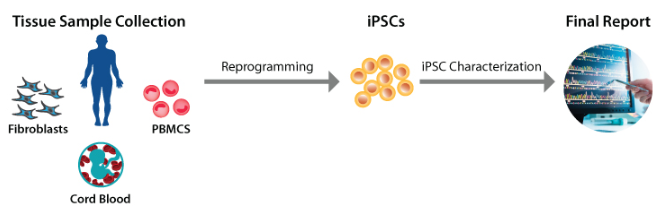
For an overview of available services, see iPSC Services & Products.
For our iPSC lines, iPSC-derived predifferentiated cells and other convenient products, have a look at iPSC Research.
Haemostasis & Thrombosis Research
Custom Blood Collection Tubes for Clinical Research Applications
With a vast selection of reagents, precise draw volumes, and flexible batch sizes, we provide exactly what you need, when you need it.
Applications include:
✔ Pharmacokinetic (PK) studies
✔ Drug efficacy research
✔ Providing reliable sample integrity for diagnostic kits
✔ Development of clinical-use collection tubes (medical devices)
Get the right tubes for your research, even in small quantities!
Individual Vial Sizes and Custom Conjugations
Haemostasis and thrombosis research often requires individual product packaging, customized vialing, and tailored protein conjugation. We support these specialized needs with flexible solutions:
- customized vialing of human factors / coagulation proteins
- customized Bovine Lactadherin (MFG-E8/BLAC) conjugates with Alexa Fluor™ 555, 568 or 647.
Contact us to learn more.
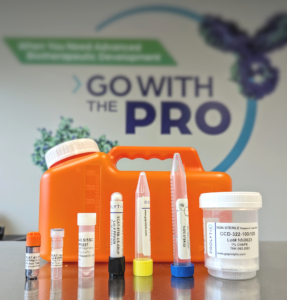
Cell Isolation & Culture Media
Custom Cell Isolation
We provide customized cell isolation services designed for researchers working with human primary cells. Our expertise ensures the isolation, expansion, and preparation of high-quality human cells, including complete cell set isolation – allowing you to obtain multiple cell types from the same donor for seamless experimental consistency.
To further support your research, we offer lot reservations tailored to your specific needs, as well as matched cell sets from the same donor, ensuring optimal compatibility for your studies.
Let us help you find the perfect cell solutions for your research.
Custom Cell Culture Media and Solutions
Lifeline® Cell Technology, our trusted supplier, specializes in providing high-quality cell culture media and solutions for the life science industry. Through us, you can access their extensive expertise in customizing and producing tailored media and reagents to support the needs of research and bio-pharmaceutical professionals.
Custom product options include, but are not limited to:
- Human Cell Culture Media
- Xeno-Free (Animal-Derived Component Free) Cell Culture Media
- Mammalian Cell Culture Media
- Insect Cell Culture Media
- Plant Culture Media
- Buffers and Salt solutions
- Protein Purification Solutions
- Molecular Biology Reagents
- Cell Culture Growth Supplements
- Sterility Challenge Media (Tryptic Soy broth)
Additional Quality Control testing is available to suit your needs.
Custom Kit Assemblies
Through Lifeline® Cell Technology, we can create a custom kit with the reagents, media, and LifeFactors that will work together based on your research needs.
Turnaround Time and Order Volumes
Most custom media or custom solutions products can be delivered within 6-8 weeks after a purchase order is received. We can produce custom orders as small as 10 L and we can accommodate large-scale production needs up to 1000 L.
Packaging Capabilities
We can package your custom media or custom solutions in a variety of options to fit your needs from 10 mL tubes to 500 L containers.
Custom-Formulated Cell Culture Media
Whether you need a published formulation, a modified standard media formulation, or one that requires non-standard components, we have the experience and know-how to fulfill your specific needs. Our scientists will work with you to find or design the custom formulation that performs to your specifications.
Contact us to learn more.
Enzyme Preparation and Testing
Customized Enzyme Solutions
For researchers with specialized requirements, we can facilitate customized enzyme preparations through our trusted supplier, Worthington Biochemical Corporation (WBC).
With decades of expertise in enzyme purification, WBC offers:
- Custom Enzyme Development – Creation of entirely new enzyme products based on your specific needs.
- Process Modifications – Adjustments to existing production procedures to meet unique research requirements.
- Specialized Quality Control – Additional testing to ensure the highest standards for your application.
Whether you need a unique formulation or modifications to standard protocols, we can help you find the right solution. Contact us to explore the feasibility of your custom enzyme project!
Collagenase Sampling Program, Lot Reservation & Matching Service
Choosing the optimal collagenase for your specific tissue and experimental setup is crucial for achieving consistent and reliable results, as variations in enzyme activity can significantly impact your outcomes. With our extensive range of collagenase preparations (each available in multiple lots), we are here to assist you in selecting the most suitable option tailored to your needs.
Collagenase Sampling Program & Lot Reservation
Partially purified collagenases – such as Worthington Collagenase Types 1-4 (CLS-1, CLS-2, CLS-3 and CLS-4) – naturally exhibit lot-to-lot variation. This batch-to-batch inconsistency is a standard characteristic of crude enzyme preparations. Consequently, a collagenase lot that delivers high yields in one tissue dissociation protocol may perform differently in another cell isolation application.
Pre-testing a specific lot or collagenase type before committing to a larger purchase (>5 g) is the most practical way to ensure reliable, reproducible results. For detailed guidance on choosing the right enzyme, consult Collagenase Wiki or contact us.
Our Collagenase Sampling Program takes the guesswork out of this process: we help you select the ideal candidates, recommend specific lots based on your application, and reserve stock while you test.
How it works
- Request up to 100 mg each of up to two different collagenase lots or types – free of charge.
- Test both in your own experimental setup over a 4-week evaluation period.
- We reserve a minimum of 5 g per lot under your name throughout the evaluation period, ensuring availability once you have made your decision.
- Once you have identified the best-performing lot, simply reference it when placing your order – and you will receive the exact same batch.
Not sure which lots or types to start with? We are happy to discuss your application and make a targeted recommendation before you request your samples.
Contact us to join the Collagenase Sampling Program or to discuss your project to find the best fitting tissue dissociation enzymes.
Lot Matching Service
You have found the collagenase lot that works perfectly in your application – but when it comes to reordering, that lot is no longer available. Enzyme variability between lots can impact experimental outcomes and switching without guidance risks introducing unwanted variability into your results.
Our Lot Matching Service is designed to bridge exactly this gap.
Contact us to reorder your preferred lot or to discuss a suitable alternative.
How it works
- Simply provide us with the lot number of the collagenase that has worked well in your experiments.
- We will check availability and reserve stock for you wherever possible.
- Should your lot no longer be available, we identify the closest alternative by comparing enzymatic activity profiles – including collagenase activity and relevant side activities such as clostripain and tryptic activity.
- We recommend the best match to ensure a seamless transition with minimal impact on your experimental outcomes.