Overview
- Species: Human
- Features: cryopreserved, male, TARGATT
- iPSC: iPSC control line, iPSC Services
Cat.-Nr.: AST-9750
Description
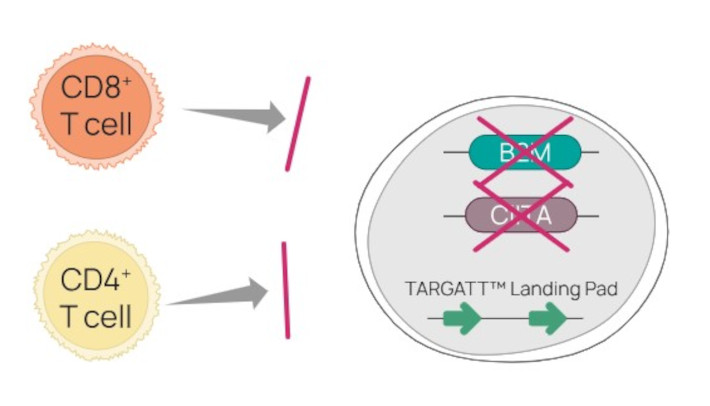
One common strategy for engineering hypoimmune cells is to disrupt genes involved in HLA expression using B2M/CIITA double knock-out, which eliminates the expression of HLA Class I and II molecules.
But HLA knockout alone might not be enough. Natural killer (NK) cells provide another layer of immune surveillance. Unlike conventional T cells, NK cells can become activated when they encounter cells with abnormally low levels of HLA Class I. And this creates an important engineering challenge: reducing HLA Class I expression may decrease T-cell recognition, but the same modification can potentially increase susceptibility to NK-cell-mediated killing.
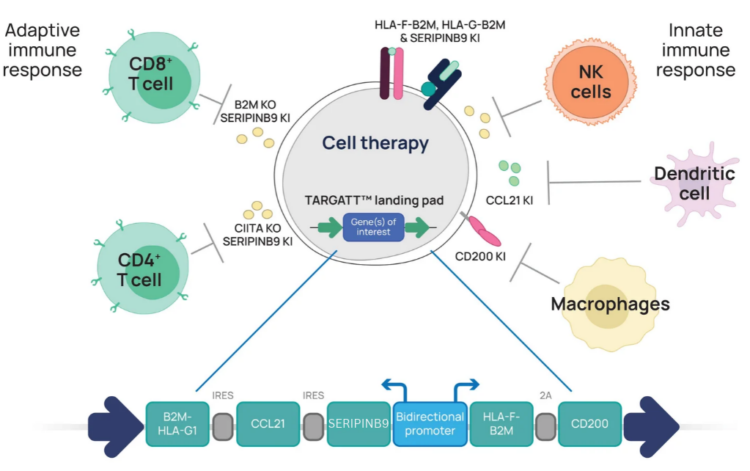
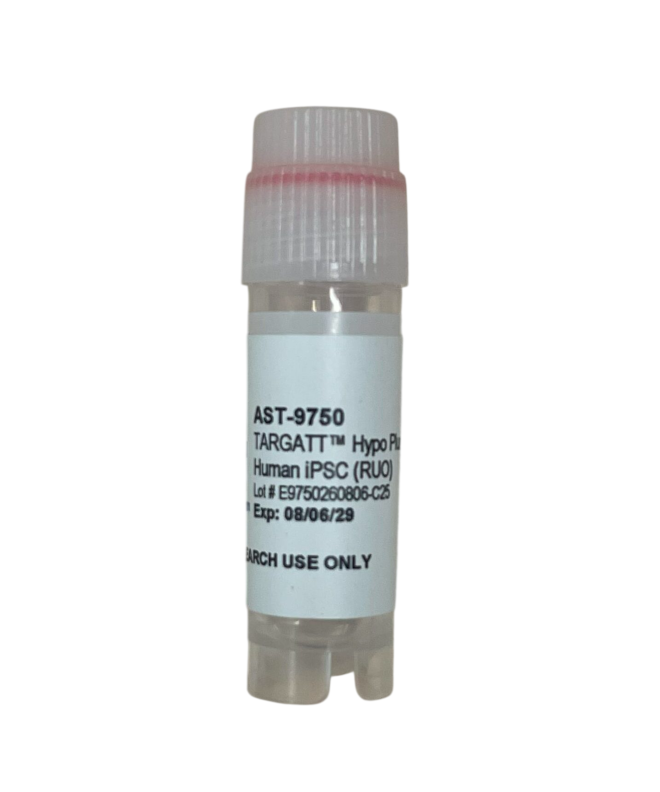
Rather than relying exclusively on HLA reduction, AST-9750 TARGATT™ Hypo Plus Human iPSC combines two targeted knockouts—B2M and CIITA—with five complementary immune-modulatory knock-ins that address complementary immune pathways.
This product also harnesses the power of the TARGATT™ platform, which means you can insert all these genes in a single reaction—up to 20 kb—with additional DNA over 20 kb added in nested reactions. And its placement at the H11 safe harbor locus avoids the potential for silencing and harmful random integration that you get with lentivirus and transposon-mediated integration and consistently delivers gene expression*.
| Cat. # | AST-9750 |
| Reprogramming method | Episomal |
| Donor tissue | CD34+ Umbilical Cord Blood Cells |
| Gender | Male |
| Grade | Research only |
| Quantity | 1 x 10⁶ cells/vial |
*Constructs must have already been shown to be expressable in iPSCs or the differentiated cell type.
A characterized iPSC starting point for allogeneic and multilineage immune-evasion research:
How it works:
AST-9750 TARGATT™ Hypo Plus Human iPSC is a starting platform designed to address multiple mechanisms involved in allogeneic immune recognition and clearance by combining two targeted knockouts with five complementary immune-modulatory knock-ins.
B2M and CIITA double knockout
The cell surface expression of HLA I and HLA II molecules is eliminated by knocking out two genes:
B2M, which encodes the ß2-microglobulin protein, a key part of the HLA class I complex
CIITA, the HLA II transactivator which is essential for transcription of HLA class II genes
Knocking out cell surface expression of HLA I and HLA II eliminates the T cell response, although other gene edits are needed to avoid innate immune responses.
Non-Classical HLA Signaling
HLA-F-B2M and HLA-G-B2M are two of the complementary immune-modulatory knock-ins incorporated to address innate immune responses associated with reduced conventional HLA expression, including NK-cell activity.
Myeloid and Immune Modulation
The CD200 knock-in provides an additional immunoregulatory mechanism relevant to interactions with myeloid immune cells, while the CCL21 knock-in adds another dimension intended to influence immune-cell recruitment and the local immune environment.
Cytotoxic Resistance
SERPINB9 is an endogenous inhibitor of granzyme B, a cytotoxic protease used by cytotoxic T lymphocytes and NK cells. Its inclusion as a complementary immune-modulatory knock-in provides an additional design element intended to address granzyme B-mediated cytotoxicity.
Together, these targeted knockouts and complementary immune-modulatory knock-ins are designed to address multiple adaptive and innate immune pathways.
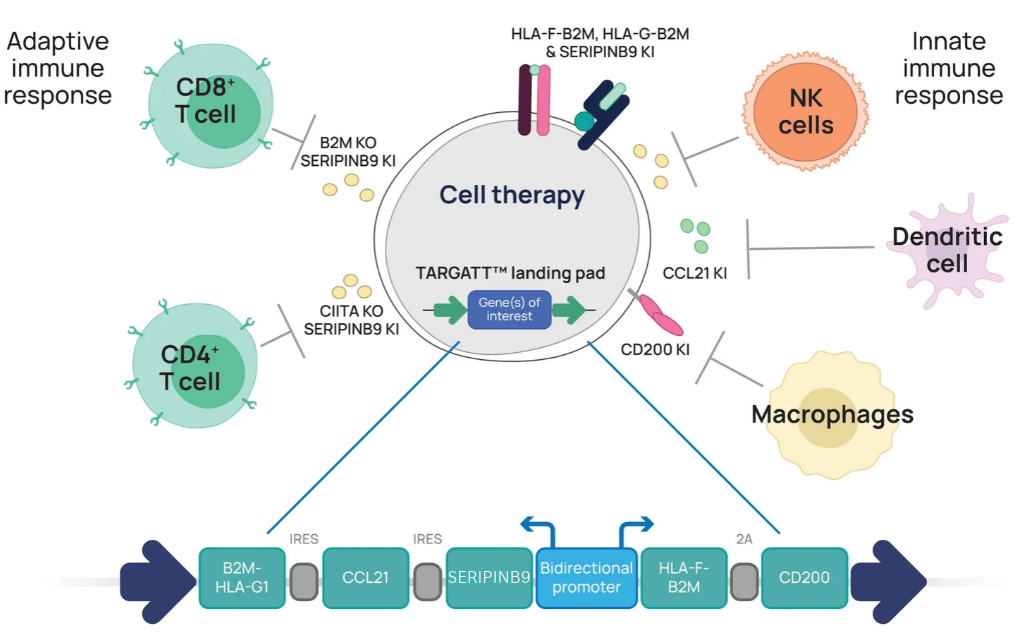
TARGATT™ Hypo Plus Human iPSC combines targeted knockouts and immune-modulatory knock-ins to address multiple immune pathways.
For more information:
Discover the full capabilities of TARGATT™ technology and services.
Have specific questions? Contact us – our scientific team is ready to support your project.
SUPPLIER:
Applied StemCell
STATUS:
In Stock
SIZE:
1 x 10*6 cells/vial
Confirmed knock-out of B2M and CIITA by Sanger sequencing
Sanger sequencing confirmed frameshift deletions. Flow cytometry confirmed loss of B2M protein expression. Contact us for more information.
HLA-G and HLA-F data support the NK-cell rationale
Engineered HEK293 cells expressing HLA-G or HLA-F showed significantly lower NK-cell-mediated cytotoxicity than the mCherry control. The difference between the HLA-G and HLA-F groups was not statistically significant. Contact us for more information.
AST-9750 clone C25 expresses CD200 and SERPINB9
Flow cytometry confirmed CD200 expression in 97.8% and SERPINB9 expression in 72.4% of analyzed AST-9750 clone C25 cells. CD200 expression was highly consistent across the population, while SERPINB9 expression was more heterogeneous. These data directly confirm two elements from the inserted cassette. Contact us for more information.
Clone C25 retains an iPSC pluripotency-marker profile
OCT4 and SOX2 are nuclear transcription factors associated with maintenance of pluripotency, while TRA-1-60 and SSEA4 are cell-surface markers commonly expressed by undifferentiated human iPSCs. The high positive populations support retention of a pluripotency-marker profile. Contact us for more information.
Genomic and sterility data characterize the starting line
C25 and C26 were negative for selected pathogens and mycoplasma. No bacterial or fungal growth was detected. The results support baseline genomic and microbiological quality for RUO use. Contact us for more information.

You need to load content from reCAPTCHA to submit the form. Please note that doing so will share data with third-party providers.
More InformationYou are currently viewing a placeholder content from Turnstile. To access the actual content, click the button below. Please note that doing so will share data with third-party providers.
More InformationYou need to load content from reCAPTCHA to submit the form. Please note that doing so will share data with third-party providers.
More InformationYou are currently viewing a placeholder content from Facebook. To access the actual content, click the button below. Please note that doing so will share data with third-party providers.
More InformationYou are currently viewing a placeholder content from Instagram. To access the actual content, click the button below. Please note that doing so will share data with third-party providers.
More InformationYou are currently viewing a placeholder content from X. To access the actual content, click the button below. Please note that doing so will share data with third-party providers.
More Information